Showing posts with label Social Commentary. Show all posts

Saturday, December 6, 2025

Surviving the Move

         Moving day was rough. I’d been packing and organizing for days, getting checks sorted for the prorated rent and the new apartment. Everything seemed lined up — until I checked my email and saw a Security/Fraud Alert from PNC. They had sent it at 4:15 p.m. with a deadline to call back by 8:46 p.m. I didn’t see it until much later. When I looked at my account, I saw they had returned the first rent check for “suspicious signature.” I haven’t written a check in years, so of course it looked unusual to them. That left me stuck: the apartment complex wouldn’t get their money, and I couldn’t reach the fraud branch until morning. Meanwhile, movers were scheduled for 9 a.m., keys weren’t available until 9, and I still had to get Dad up and ready. I authorized the second check just in case they flagged that one too, but I’ll still have to rewrite the first check once the complex gets it back — and probably pay penalties for the delay. Not the kind of problem you want on top of a move.

The good part: the movers showed up — two young guys from Cardinal Moving. They hauled everything into our new “mirror image” apartment. Same layout, reversed, with odd differences in shapes and sizes. The complex covered the move since they forced us out, and I tipped the movers $50 each. Worth it. They laughed at my jokes too, which made the day lighter.

Mary Ann, our aide, arrived just as they finished. She organized Dad’s bathroom and stayed after her shift to help me tackle the mountain of leftover stuff. We worked for hours. She’s back tomorrow, which is a relief.

By midnight, I was still shuttling kitchen and bedroom items. I had set up the cable box for Dad, but the Wi‑Fi and internet wouldn’t activate. Only the living room outlet was wired to work; the bedroom outlet was dead. Spectrum is scheduled to come tomorrow between 2–3 p.m. to fix it. For now, I dragged the modem and router into the living room, and thankfully my PC runs on Wi‑Fi. Proof: you’re reading this.

I was sore and exhausted, and that’s when I remembered the golden rule of moving: make the bed first. I had forgotten it earlier in the day, but finally stopped, set up the bed, and made it. Hours later, when I couldn’t stand anymore, it was there waiting — the one piece of comfort in the middle of chaos. I collapsed into it and slept five hours straight. When I woke, I crept out, finished the last tasks, vacuumed, emptied trash, filmed a walk‑through, and turned in the keys. Done.

Now comes the fallout: the returned check, possible charges for “stained walls” (a decade‑long saga), and the reality of unpacking. Mary Ann texted she’s fine except for a backache. I, meanwhile, hurt everywhere. And I’m already spotting complications: suction grab bars don’t stick to these shower stalls, no medicine cabinets, and no towel racks inside the shower/tub. There’s one outside in the bathroom, but that doesn’t help with drying mats or keeping towels within reach while bathing. Instead, they added a little decorative shelf that’s useless for us. Designer nonsense.

But we did it. We moved. We survived. Now we keep surviving. And I finally see what “structural changes” they wanted: open‑concept fads, fewer carpets, trendy showers. Someone at corporate decided uniform style mattered more than stability. So people get uprooted for fashion. Welcome to the modern world.


Wednesday, October 29, 2025

Thoughts From the Deep End of the Pool: After the Caregiving Ends


I don’t look to the end. I don’t wait for the end of my caregiving.
I’ve prepared myself to survive it — because it’s not an addiction, but it can feel like one.
If you haven’t prepared yourself, it can hit hard. The withdrawals.

There’s a very thin line between “I can’t wait for this to be over” and “What do I do with myself now?”
When the structured days and routines come to an end, the life you had feels empty.
The emotions you thought you’d immunized yourself to — or buried — come out in full force.
You feel those years, compressed and heavy. Suddenly there. Suddenly evident.

We couldn’t wait to get our life back — but the life we want back is gone.
We’re no longer the same person.
We can’t go back.
We have to carve out a new life. A new existence.
Become a new version of ourselves.


What will I do, alone with myself?
My daily life will be free to be just me.
You’d think I’d be happy about that.
I am. And I’m not.

My sense of purpose, of pride — it won’t be there anymore.
I can’t go back to who I once was.
The times were different then. The world was different.
My world was different.
Similar, perhaps. But changed.

It’s like being forced to retire from a job you loved. Or liked. Or didn’t like — but needed.
You get the gold watch. The congratulations. The sympathies.
But you’re still out of a job.

You can now take time for yourself. Sit. Relax. Feed the pigeons.
But feeding the pigeons is caregiving too.


You become alone with yourself again.
That can be harder than we realize.

You wake up and have nothing to do.
No one coming over to get you moving.
No nurses. No aides.
The bed doesn’t need to be made.
The sink doesn’t need to be emptied.
The bathroom doesn’t need to be that clean.

You have time.
There’s no rush.
No responsibilities.
Not to anyone but yourself.


When you’re a caregiver, there’s structure.
Adventure too.
Excitement — even the kind you didn’t want.
The daily unexpecteds.
It’s the job. The life.

And when it’s over — with relief or disappointment — it all comes down to:
What now?

“I want my life back,” some say.
“I want a life,” others say.

But we do have a life.
It’s caregiving.
A job we might not have wanted. Might not have liked.
But we’ll mourn it when it’s gone.

Because once it’s gone, we have to make a new life.
We can’t go back.
We’ll never be the same.
Nothing will be the same.

We are now… experienced.


When my father passes, I will lose the last of my parents.
The closest relative to me.
I will lose a love. A responsibility.
The last of my original family.

The rooms will feel too quiet.
There will be no one there for me to walk in and see.
No look to give. No look returned.

Sometimes, that’s enough for me.
No words. Just knowing someone else is there.
Alive.
And I’m not alone with myself.

Strange how that is.
But for me, it’s true.

Not alone — because someone else is here, in another room.
They need me.
And I need them.

Strangely human.
Or maybe just natural for all living things who think and feel.


My life will change when my father is gone.
Everything will change.
How I live. Where I live.
Who I live with — or not.

Finances will change.
Life will be harder.
Not unlivable.
Just a struggle.

I’m older now.
So it will be even more so.


Making meals for one when the serving size is for two.
Even that will remind me.
I don’t need to buy family-sized anymore.
That will weigh on me too.

Strange how that is.


I plan ahead for little things.
I can’t plan for everything.
No way to do that.

I do things for me — just to make them habit.
Something that will sustain me when I’m no longer in charge.
No longer… employed.

I make routines outside of caregiving.
Chores that aren’t about my loved one.
Not directly.

I clean the bathroom.
Not for the visitors.
Not for the nurses.
They won’t be coming anymore.

I do it for me.
Because I will still be a caregiver.
I will still have that responsibility.

I will be the caregiver for myself.

And if I let things slide —
I will have become a bad caregiver.

And that is something no one can ever accuse me of.
Not even myself.


I will never say, “I used to be a caregiver.”
Once you are one, you always are one.
Even if it’s just for yourself.
Alone.


Copyright 2025 M. W. Van Dyke
All Rights Reserved


Sunday, October 5, 2025

Elder Neglect Is Not a Grey Area


There is no middle ground with elder neglect

I read a post in a dementia family caregiver support group, and I just can't not say what I have to say. Others might be in similar situations, or variances of it, and it is to them that I am writing my thoughts on this matter. In this type of situation there are no grey areas — there is only black and white. There are no mitigating factors. And, as I tend to be, I will say it very directly.

The original poster described a father with vascular dementia, diabetes, and cognitive decline. His wife — who endured decades of abuse — refuses to care for him, works long hours to avoid being home, and won’t allow him to be placed in a facility. Instead, she moved her own relatives — her brother and his wife — into the house to care for him, despite the fact that he and they have always hated each other. The uncle’s adult daughter also lives in the house, but she is described as having the mentality of a teenager and doesn’t appear to contribute to the caregiving. The sister holds POA but does not live in the home, and she defers to the mother. The poster feels helpless, visits only when the others aren’t around, and is heartbroken by the neglect. And notably, the poster suggests that the family is financially well off — able to afford 24/7 care, but choosing not to.

Now, here’s what I see:

This is not just a sad situation. It’s criminal neglect — wrapped in emotional choreography and inheritance positioning. The father, whatever his past, is now vulnerable. And the people around him — who have the legal and financial means to intervene — are choosing not to.

I want to say something about abuse. It’s a catch-all term these days, and while it can be valid, it can also flatten decades of complexity. The father in this story may have been a monster. Or perhaps he was a man of his times — rigid, controlling, emotionally absent, physically punitive, shaped by norms that no longer hold. But he is not a convicted criminal. He is not in prison. Some in this might feel he should have been, but his punishment is not up to them to decide on their own. That’s not how justice works. And what’s happening to him now — this abandonment, this neglect, this strategic humiliation — is criminal. Not metaphorically. Legally.

The mother’s refusal to act is emotionally legible. She endured abuse. She wants separation and distance. But her refusal to leave the house, paired with her control over spending, suggests the money is co-mingled. She may see it as reparations. She may be preserving her own financial future. But she’s also using proximity as punishment — installing hated relatives as caregivers. That’s not just an unfortunate arrangement. That’s strategic degradation.

The sister, holding POA or DPOA, has a fiduciary duty to act in the father’s best interest. Her deference to the mother is not just passivity — it’s a breach. If the POA is durable and active, she could intervene. She chooses not to. That silence is complicity. It is elder abuse.

And then there’s the CNA. A certified nursing assistant is mentioned as being involved. That means a licensed professional is witnessing this neglect. And if they are not reporting it, they are violating their own legal and ethical obligations. Mandated reporting isn’t optional — it’s a duty.

And the insulin situation is telling. He is not refusing injections — he is self-administering. And how is someone with dementia and memory issues allowed to control that? He isn’t being supervised. The CNA isn’t administering. The doctor and sister aren’t intervening. Everyone is capitulating. That’s not just unfortunate. That’s another level of neglect. He is not being medically managed. His diabetes is being left to chance, emotion, and avoidance. Him being found alone, foaming at the mouth, rushed to the hospital — says it all. He cannot be allowed to control this.

The poster feels bad. They visit when it’s safe. They avoid conflict. But feeling isn’t doing. And while their grief is real, their restraint may be shaped by emotional allegiance — or fear of alienating the mother, who controls the purse and the future.

And that’s the axis everything spins around: mother’s money. Not just as currency, but as control, legacy, and leverage. Everyone is performing. The mother performs detachment. The sister performs helplessness. The uncle and aunt perform unskilled care — care that isn’t care at all. It’s ancillary. It’s not caregiving. The poster performs heartbreak. But beneath it all is a quiet war over who gets what, when, and how — and everyone seems to be benefiting in some way, except the father, the one that needs to be cared for.

If you’re in a similar situation, ask yourself:

  • Who holds legal authority — and are they using it?
  • Who controls the money — and how is that shaping silence?
  • Who is being punished — and who is benefiting?
  • Who is professionally obligated to report — and are they?
  • And most of all: what are you doing, not just feeling?

Because eldercare and dementia care isn’t just about compassion. It’s about clarity, accountability, and the courage to act. The responsibility to act.

And yes, the responsibility to report — to the hospital, to social workers, to the CNA and her employers, to Adult Protective Services. To the police, too, if need be.

And if the person at the center of it all is still expressing distress, still asking to leave, still recognizing neglect — even if he’s confused or meek — that may mean he still has legal capacity. He may be able to revoke his POA, hire a lawyer, or request a social worker. But he likely can’t do it alone. He may feel trapped. He may need someone to step in — not just emotionally, but legally.

Feeling bad is not enough. If you see it and do nothing, you are complicit. You are enabling. You forfeit the right to call it empathy.

This is my opinion, and it is a considered opinion — backed by legality, and grounded in my sense of morality. If someone doesn’t want to care for another, they should leave it to those who do, or can, or hire the right people to do it. If they do not want to, others must intercede. It is not easy, I know. Relationships are fractured or destroyed over this kind of thing. It all comes down to who you really are inside.

I know who I am.


Friday, September 19, 2025

When It’s Time to Empty the Nest - Step Up or Step Out

When it had to change - fly or fall


 I read a post here that stuck with me: 

A woman is caring for her elderly parents while also housing her two grown sons, ages 28 and 31. Both are unemployed. Neither contributes to rent or food. She’s relying on food pantries and still coming up short.

She finally told her sons they’d need to start paying or leave. Her mother overheard and called her a bad mother, saying she’d leave with them.

She’s not married. She’s the only one holding the house together. And she’s asking if she’s wrong for expecting grown men to contribute.

__________________________________________

I had something to say about that. I only share my reply here by request, and for others who might need to see it.

___________________________________________

Let’s start with the truth — your sons didn’t become this way overnight. This is their normal. They were allowed, not directed. They were accommodated, not challenged. And now, at 28 and 31, they have no jobs, no drive, no urgency — because the house has never required it.

If nothing changes, they’ll still be there at 40. And your mother? She’s used to them being there too. That’s her normal. She’s not helping you raise men — she’s helping you keep them dependent.

This is enabling — full stop.

But let’s also be real — kicking them out cold won’t magically grow them up. They don’t have the mindset or the life skills — not yet. And in this modern world, where survival takes hustle and grit, they’re not equipped. That’s not all your fault — but it is your reality.

It’s called entitlement. Not the loud kind — the quiet kind that grows when expectations are never set and consequences are always delayed. It was allowed to take root. It’s a mindset shaped by comfort without accountability, proximity without responsibility. Spoiled into it — not by intent, but by omission. That’s the truth.

So here’s the first shift:  

Stop calling it “help.”  

Covering their own food and living expenses isn’t helping you. It’s basic adulthood. “Help” is what happens after they meet their own responsibilities. And they’re not watching their grandparents — they’re simply present. That’s not caregiving. That’s proximity. Stop pretending they’re earning their keep. They’re not. That lie is costing you.

And let’s drop the fantasy:  

You’re not renting out rooms.  

You’re caring for elderly parents. Dementia is in the mix. No one’s moving in. That’s not a viable plan — it’s a placeholder for the hope that things will change without confrontation.

So here’s what confrontation looks like:

“No more. I’m sorry we didn’t do right by you when you were younger — didn’t drive you, didn’t direct you. I’m doing it now, before it’s too late.  

You have 30 days to find a job or find somewhere else to live and eat. If you don’t, I will file eviction proceedings.  

You have 45 days from today to start paying your share of rent, utilities, and food. If you need two jobs, get two jobs. Clean floors at McDonald’s if you have to.  

Part-time work won’t cut it. It’s time to step up — or step out.”

This isn’t cruelty — it’s clarity.  

This isn’t abandonment — it’s accountability.  

This isn’t a threat — it’s a correction.

And for every caregiver reading this — silence doesn’t protect you. It just prolongs the cost. Boundaries aren’t betrayal. They’re the only way to survive with your sanity intact.

I feel for you. I know this is hard — and it will be hard. You don’t want to be hard-nosed, but this is about survival. You’re out digging for potatoes and roots in frozen ground while two able-bodied men — boys — sit inside, warm and waiting for you to provide. This caregiving is going to get harder, not easier. And our lives are going to get harder with age and the economy. It’s time to start caring for yourself first — because it’s clear there’s no one there now caring for you.


Friday, August 29, 2025

Not the Face of This - Social Commentary on Emma Heming Willis

There are lines, and there are choices


People are talking about Emma Heming Willis’s interview with Diane Sawyer. Some are going to town on the contradictions — what she’s said before, what she’s done, what she’s doing now, and her role as an advocate for FTD. This is what I have to say about it, in no uncertain terms. Agree with me or not, this is my take. And it’s an informed one.

Not the Face of This

I can see both sides of this. And I’ll say plainly: if I could, I’d hire more help for my father. If I could, I wouldn’t be a solo family caregiver. If I had the resources, we’d have round-the-clock professionals. Most of us didn’t choose this setup — we adapted to it. For those of us already living with the person we care for, the dynamic is different. This was our home. To move them out is the same as placing them in a facility. If Emma had moved herself and her kids elsewhere, that would’ve been her leaving — taking the children and, in effect, abandoning him to others. That’s not judgment. That’s just the shape of the choice.

Emma had her husband placed. That is the reality of it. Not in a nursing home or care facility, but placed, elsewhere. It is the same exact thing.

There’s a fine line here, and most people miss it. Emma isn’t a family caregiver, and never was. She’s married to someone with FTD (Frontotemporal Dementia), a neurological disorder that affects behavior, speech, and personality. It’s not Alzheimer’s. It’s not a flower delivery service. Emma Heming Willis isn’t a family caregiver. She’s a spouse. That’s not semantics — it’s structure. It’s the reality. She’s done some caregiving, yes — but that doesn’t make her his caregiver. Wanting to be one, trying to be one, even saying she is one — none of that makes it so. Living with someone who has dementia and handling some of their needs doesn’t automatically make you their caregiver. Not in the way that word means something to those of us who live it.

Yes, she’s contradicted herself. That’s human. But she shouldn’t be the face of this. Not of FTD, not of dementia, not of caregiving. Her inconvenienced life doesn’t give her that authority. The deeds don’t weigh enough. She kept working, kept traveling, kept doing interviews. She had help — nurses, caregivers, support. And now she’s writing a book about it all, while not doing it. She moved him elsewhere. She showed her real self before the diagnosis, when she spoke about his coldness and how it made her feel. And that’s the thread: it’s mostly about how she feels. Not how he feels. Not the depth of what caregiving actually is.

And let’s not forget what she said before the diagnosis: “How can I remain in a marriage that doesn’t feel like what we had?” That wasn’t a passing thought. That was contemplation — of leaving, of redefining the relationship, of stepping away. After the diagnosis, yes, she overhauled their lives. She halted playdates, stopped sleepovers, said “I isolated our whole family, and that was by design.” But the emotional exit had already begun. That quote fills in a lot of blanks.

It tells me this wasn’t a caregiving pivot — it was a continuation of emotional distance, now reframed by circumstance. The diagnosis didn’t create the rupture. It gave it a name, a reason, and eventually, a public-facing narrative. But the core question — how can I stay in this marriage — was already there. And that matters.

If I could, I’d have others doing most of the work. But I’d still be here. I’d still have my own life. And I wouldn’t be writing about caregiving — because I wouldn’t be the one doing it. I’m not so self-oriented that I’d claim that role. My story would be about writing the checks, mopping up a spill or two. That would be my truth. I’d write about how I felt, yes — but not as a caregiver. Not as the face of anything. It would be about me. And the only reason anyone would care to read it is if I were famous, or married to someone who is.

That’s the truth of it. I don’t fault Emma for doing what she’s doing — except for writing a book she has no business writing. She’s famous because her husband is famous. And I don’t care what she has to tell us, because what she’ll say is: I hired caregivers, moved my husband elsewhere so the kids and I could remember him as he was. Which is just another way of saying: out of sight, out of mind, out of our hair. Back to playdates, no bedpans, no being reminded daily how sad it is our LO isn't who he used to be. Life isn’t as it used to be. We can feel sad, we are sad, but not sad enough to keep him at home or see him every day. See? I bought a house close to here, for him, so we didn’t place him in a facility. We care. We almost see him as often as his ex-wife and her kids. And how do I feel about it? Read the next chapter of my book.

Because that’s the privilege — not just having options, but having the space to feel about things more than you actually have to do them. It’s advocacy from the outside, from a curated distance, from a quiet home where you can sip tea and contemplate the plight of others down in the trenches — without ever having lived in them yourself.


Thursday, July 31, 2025

Thoughts from the Deep End of the Pool

Real life, not just caregiving life


Thoughts from the Deep End of the Pool

There was a time when the phone lit up like clockwork. When my dad had money — when I had money — the calls came without prompting. When Dad or I had something to give — money, help, a ride, advice, or contacts — the calls weren’t quite so discretionary. Or seasonal.

Now? Silence has its own schedule. I’m not bitter. Just noticing. The shift in attention and retention has its own currency — and love doesn’t seem to be the tender.

Empty pockets don’t attract flies.

I admit I haven’t made the calls, either. I don’t maintain contact with those people because my life is lived in a very specific space — a caregiving space. And a distant one. Out of sight, out of mind. The habit of keeping in touch faded with time, and not just because of caregiving or dementia. Life weighs heavy on both sides of the scale. It doesn't tip — it sinks. And I can't fault people for that. I'm as much to blame as anyone. I didn't keep the contact going. And just because my dad is elderly now, with dementia, the habit of them calling him has long since faded out.

Those people will live with regret after my dad passes. They’ll think of him more often, wish they’d done more, and suffer over it more than they did during his last days and years. I know they will.

Because whenever my dad is in the hospital, they call. They post. They check in.

When he’s home — alone, with me — there’s silence.

Priorities of the mind. Preparing themselves to grieve.

And no one grieves for the living … apparently. Not when there isn’t a chance of something to gain.

The thing about people who ask or beg — who take, who accept — is they rarely offer the same in return. Not without reminding. Not without prompting. Sometimes not without blackmail — emotional or evidentiary.

I've never been the type to ask for help, financial or otherwise — not from family. I write things, say things that detail our struggles and needs, and if people don’t offer, I don’t ask.

I've accepted help from my father, sure, and I’ve given help in return — money too. He never asked me. I never asked him. We just offered. That’s just our nature, I guess.

When we could help, we did help. Even when we got taken advantage of, we didn’t stop helping — not when the need was legitimate.

If it doesn’t occur to someone to offer help, that’s just who they are — their nature. I tend to unconsciously distance myself from people like that, even if I care about them. Even if I care deeply.

The ones that bother me most these days? The fair-weather ones. The “OC of the moment” ones.

They call, they say, I’m going to video call every week from now on. I want to do this. There’s no reason not to. And for a month or two, they do. And then something comes up — and it evaporates. Poof.

Never mentioned again. Until the next wave of mood or guilt hits. It cycles.

I’m always here. Showing up. Shoveling things. Holding it together. Bearing the weight while others drift in and out.

And sure — life happens. People get sick, get busy, get distracted, get weighed down themselves. But the silence that follows connection? That’s harder to excuse when someone’s 92. Every week counts differently at that age. Their sporadic involvement doesn’t bother my dad much. But it bothers me.

I had hope for a little while. I felt happy, for a while. And when it’s over, it weighs heavier than before.

They could have. Should have. Would have. But didn’t. Choice — not circumstance.

We can’t expect people to be selfless. But we do hope. Especially when it’s family.

And when you don’t ask them, they’ll say, I would have, but you never asked.

And when you do ask them, they’ll say, I wish I could, but I can’t.

And they cling to their would have, and forget all about the could have and the should have — but didn’t.

Money and resources play a major role in this, no matter what anyone claims. When you have — and you’re giving — people are there. When you have not — they are not.

If there’s something for them at the end, they’ll probably show up near the end. That’s why they come out of the woodwork when someone’s in the hospital — but not when they’re at home or in long-term care.

Yes, your focus must be on your own family, your life, your work. But when you forget who helped you get where you are — and let me tell you, you didn’t do it alone — you’re not a decent, caring person.

You’re just a person.

And everything you give to you and yours? You won’t realize it, but you’re teaching them. And when your time comes, they’ll treat you the same way.

You just don’t know it yet.


M.W. Van Dyke


Friday, July 4, 2025

My Father’s Journey Through the Rise and Fall of American Hospitality: From Dairy Farms to Drive-Thrus

The long road


Introduction

Why I Wrote This

This isn’t about nostalgia.
It’s about memory — and what happens when it’s erased.

It’s about the people who built things.
The ones who stayed.
The ones who believed.

It’s about what was lost.
And what was taken.

I wrote this not to settle scores, but to set the record straight.
Because some stories don’t get told.
Some names get left out.
And some truths are too quiet to survive without someone writing them down.

This is me writing it down.

This is not a biography. It’s a record. A tribute. A reckoning.


Section I: My Father, The Builder

My Father’s Journey Through American Hospitality: From Dairy Farms to Drive-Thrus:

My father, Guy W. Van Dyke, was born on August 31st, 1933 — in the shadow of the Great Depression, on land that demanded more from a boy than most men give in a lifetime. He spent his early years on a dairy farm, where the days started before sunrise and ended only when the work was done. It wasn’t an easy life, but it was an honest one. It taught him discipline, endurance, and the quiet pride of doing things right the first time.

He excelled in school — not just academically, but socially. He was involved, active, and respected. He wasn’t the loudest voice in the room, but people listened when he spoke. That would become a theme throughout his life.

My dad as a kid
[Dad as a child]
Dad graduating from High School
[Dad - High School Grad]


Then came Korea. Like many young men of his generation, he was sent overseas and came back changed. Not broken — just sharpened. More focused. More determined. He didn’t talk much about what he saw there, but you could feel it in the way he carried himself. He had seen the world at its worst, and he came home ready to build something better.

Dad on Troop Ship
[Dad on a Troop Ship]

He met my mother, and they married. He worked as an insurance agent and held down other jobs, as veterans often did — not because he had to, but because he knew how to. He was never idle. He was always moving forward.
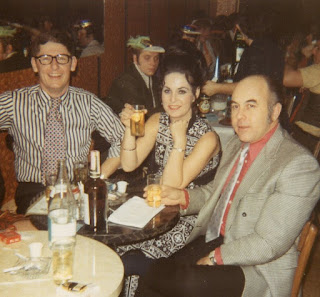
My mom and my dad
[Mom and Dad in the LJS Early Days]


Then came the opportunity that changed everything:
A family connection to Jerry’s Restaurants, and to Jerrico, Inc., in Lexington, Kentucky.
It wasn’t a gift.
It was a chance.
And my father took that chance — and ran with it.


Jerry's Employee Handbook
[An actual Jerry's Employee Handbook]


Warren Rosenthal
[Warren Rosenthal]
His relationship with Warren Rosenthal, the visionary CEO of Jerrico, quickly deepened. The two became close — not just professionally, but personally. My father became indispensable, trusted with major responsibilities and relied upon to help guide the company’s most ambitious projects. He wasn’t just part of the team — he was one of the people Rosenthal counted on to build the future.


At Jerrico, he rose through the ranks with quiet determination. When the company began developing a new seafood concept — what would become Long John Silver’s — he was there from the beginning. Before the first store opened. Before the name was finalized. Before Jim Patterson — then just a Jerry’s franchisee — was even brought in. Patterson would later become the first president of LJS, but the groundwork — the vision, the planning, the early execution — was already underway. My father was part of that foundation.

When the company needed someone to expand LJS into scaled nationwide operation from the Texas region, my father didn’t hesitate. He packed up his wife and three kids and moved us to Dallas in 1969–70. That wasn’t a supporting role. That was a leap of faith. And he made it count.

Long John Silver’s didn’t begin with Jim Patterson.
It began with Jerrico Inc., the same company behind Jerry’s Restaurants, led by Warren Rosenthal. In 1969, Jerrico launched Long John Silver’s in Lexington, Kentucky, my hometown, where I was born — not as a side project, but as a full-scale concept backed by the company’s resources and vision.

Jim Patterson was there, yes — a Jerry’s franchisee who joined the effort and later became the first president of LJS.
But he wasn’t the founder.
I know what the company’s official story says now.

But I remember how it really happened.
I was there.
I wrote it down in my diary.
Yeah — a boy with a diary.
But I’ve always been a writer.

By the early 1970s, Long John Silver’s was scaling fast — hundreds of stores across the country. Texas wasn’t where it started.
But it was where it grew.

Dad and LJS Execs
[Dad and his Long John's Team]


Dad served in the upper management branches, overseeing site selection, construction, and expansion across the Southwest. He built that region from the ground up — not just the stores, but the teams, the systems, the culture. Later, after Patterson left and the company shifted, my father became President of the Texas region — a title that reflected what he had already been doing for years.

He stayed loyal to Rosenthal, even as others followed Patterson out the door. He believed in building something lasting. And he did.
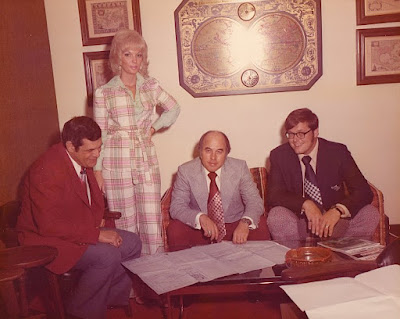

Dad at a meeting
[Planning Meeting at LJS Offices]

After Long John Silver’s, he helped shape Grandy’s Fried Chicken — a Texas-based comfort food chain that peaked in the 1980s with nearly 200 locations nationwide. He also worked with Tom Sawyer’s Old Fashioned Krispy Chicken, a lesser-known but ambitious fried chicken concept that began in California in 1978 (and later found a second life in the Philippines). These were regional brands with big aspirations — and for a time, they carved out real space in the fast food landscape.

I vividly remember living out of a hotel room in Gallup, New Mexico — just me, my sister Darcy, and my dad — during our summer vacation, while he got a Grandy’s store up and running.
It wasn’t glamorous. It wasn’t easy.
But that’s what building looked like.
Not boardrooms. Not press releases.
Just long days, late nights, and a family making it work while he made something real.

When we moved to Southern California for the Tom Sawyer’s Chicken venture, we landed just off the Sunset Strip — a strange, glittering place where restaurants didn’t just serve food. They hired actors. Models. People with headshots in their glove compartments. The line between server and screen test was paper-thin.

We met celebrities.
We went to a practice run and taping of The Gong Show with Chuck Barris.
Not because we were celebrities — but because we were in the orbit of a business that treated fried chicken like a casting call.

From there, he went on to executive leadership roles with Po Folks, People’s Restaurant, IHOP, and Chi-Chi’s — each a different chapter in the evolving story of American dining.

At People’s Restaurant, he first served as President, helping guide the brand’s growth and direction. But he didn’t just lead from the top — he believed in the concept enough to become a franchisee, opening four stores of his own. It was a bold move, rooted in belief and commitment.
Unfortunately, corporate changes and mismanagement at the top would eventually unravel the chain, leaving many — including my father — to absorb the fallout.

I remember Po Folks a little. I was off doing my own thing during the IHOP years. I was around for the Chi-Chi’s years — which, honestly, was a great experience.

And then, in 1985, when Jim Patterson launched Rally’s, guess who he called first?
My father.
He became the first employee of Rally’s — the first person Patterson trusted to help build something new.
And once again, my father delivered.

Seth Green Rally's
[Seth Green - Rally's Cha-Ching Commercial]
That early group, brought in by Patterson and my father, created a sensation — affordable but quality burgers, a bold double drive-thru model, and the now-iconic “Cha-Ching” commercials featuring a young Seth Green. It was lightning in a bottle. Those were the dream team years — people with hunger, drive, and vision who took the country by storm.

That’s when the carpetbaggers showed up — the kind of people who show up when the money’s good, not when the work is hard.
They weren’t there to build.
They were there to cash in.

And then Patterson was forced out. He was maneuvered out — quietly, but unmistakably. And slowly, almost imperceptibly at first, things began to disintegrate. Leadership changed. Priorities shifted. The soul of the company — the one my father helped shape — began to erode.

Rally’s was the one that hit my dad the hardest. He was older then, trying to save it — and his investments — from the inside. Maybe he hung on too long. Maybe he believed too much. Maybe he was too loyal. In the end, it more or less ruined him.

My father didn’t just help build companies — he helped define them.
And in the end, every single one faltered after he left — or was no longer in charge.

That’s not a coincidence. That’s a legacy.

He wasn’t just a name on an organizational chart.
He was the steady hand — the workaholic, the heavy, the stabilizing force.
The one who made things work.

And when he was gone, cracks began to form.

He never thought that about himself. But the truth is, he was the difference.
Loyal. Driven. So loud sometimes he would bring the roof down and make the angels weep and cower. He was as hard as he had learned to be in Korea.
Do it right, or get out. That was my dad’s philosophy.
Not Politically Correct in these days — but look at the state of businesses today.

I wasn’t always there. I didn’t see every deal, every decision, every late night. There are other restaurants he helped grow, but I cannot recall them all.
But I saw enough to know: my father was more than most people will ever realize. And the places he helped build? They weren’t just restaurants. They were reflections of his values — steady, honest, and intended to last and to succeed. When he was there, they always did — except for the last, and that was beyond his control.


Section II: The Bridge

Carrying the Legacy, Confronting the Cost

I didn’t set out to follow in my father’s footsteps. But somehow, I found myself walking a parallel path — not in title, not in work, but in spirit. My destiny included Jim Patterson too.

Jim Patterson
[Jim Patterson]
I worked for Americall Business Long Distance, one of Patterson’s ventures, in the years before Ross Perot’s EDS acquired it. After the acquisition, I had a choice: move to Boston and stay with EDS, or accept a position with Rally’s Hamburgers corporate. I chose Rally’s — the up-and-comer, the one with energy, momentum, and a name my family already had a hand in shaping.

I joined Rally’s during its heyday, when the “Cha-Ching” commercials were still echoing across the country and the company felt like it was on the edge of something big. I was part of the Information Systems department, and I loved that job. I lived it.

I wasn’t just punching a clock. I was solving problems, building systems, helping keep the whole thing running. I worked long hours — not because I had to, but because I wanted to. Because I believed in what we were doing. Because I believed in the people I worked with. And maybe, deep down, because I believed in what my father had helped start.

But belief doesn’t always protect you.

I believed in the company.
I was an employee — and an investor.
But I saw things. So many things.
Waste. Excess. Decisions that made someone money — but not the stockholders. Not the employees.


There was the time they installed 21-inch CAD-grade color CRT monitors in the drive-thru lanes — not touchscreens, not ruggedized kiosks, just top-of-the-line computer displays. These were the kind of monitors used for engineering workstations, not burger orders. They cost at least $1,500 apiece, even with the vendor deal we had. Most businesses couldn’t afford them. Most homes had never seen one.

And we stuck them outside.
In custom-built wooden boxes.
In full Southern sun.

No shade. No cooling system. Maybe a fan, if someone remembered.
Just glowing green text, slowly cooking in the heat — until they dimmed, warped, or died.

It was a perfect metaphor: expensive, impressive, and completely unsuited to the environment we were actually in.

The monitors didn’t run Windows themselves — they were just dumb terminals. But they were wired to in-store computers that did. Which meant that sometimes, instead of showing a burger order, the monitor would proudly display a Blue Screen of Death.

A customer would pull up expecting fries and a drink, and instead be greeted by a fatal exception error.

It was a tech flex, not a practical solution — the kind of thing that happens when someone up top says,
“Wouldn’t it be cool if…”
without ever asking,
“Will it actually work?”

No thought to cost. No plan for value recovery.
Just the allure of something that looked impressive — for a minute.
As long as it turned heads, that was enough.

And hey — if it didn’t work out?
They could always take one home.
It was, after all, for work.

21 Inch CRT

Now put those expensive monitors in 500 restaurants, with double drive-thru lanes, meaning two wooden boxes, two monitors, two wiring setups per store — and just imagine that expense.
And that waste.

In the end, we had to pull them out of all those stores.
They didn’t last long.
Or they were stolen right out of the box.


And then there were the out-of-state contractors.

Programmers brought in to build our custom point-of-sale system — not to improve it, not to integrate with proven platforms like Cisco, but to reinvent the wheel. From scratch. With our logo on the screen.

They weren’t Rally’s employees. They came from a firm out of state — Florida, maybe Boston — flown in every week or two to work on-site in Louisville. Monday to Friday. Flights, hotels, rental cars, per diems — all of it, every week. The cost of that alone could’ve funded a full-time, in-house development team. Maybe two.

They’d arrive, settle into their cubicles, and start coding — often without a full understanding of the systems we already had in place. We’d spend half the week explaining what we needed, and the other half cleaning up what didn’t work. Then they’d fly home, and we’d do it all again the next Monday.

It wasn’t their fault. They were doing the job they were paid to do.
And it didn’t matter if it took years — refining, recoding, redoing.
Because the people in charge weren’t up to speed on modern tech.
They just wanted something that looked impressive. Something they could point to and say,
“See? We built that.”

It was a system that valued outside contracts over internal continuity.
A culture that prized appearances over practicality.
And a leadership style that confused novelty with innovation.


It was the perfect metaphor for what Rally’s was becoming:
A company that once ran on hunger and instinct, now running on invoices, buzzwords, and burn rates.

Ego funding. Cash cow spending. Waste.
Not a great strategy for a company selling cheap hamburgers.


Mac vs Microsoft

And then came the Mac conversion proposal — brought up by a new executive, a man Burt Sugarman had hired from somewhere else to come to Louisville and to... coordinate.
Mostly, all he did was undermine.

Burt Sugarman, a film producer, was one of the people who forced Patterson out. He became CEO after Patterson. Then he started buying up competing restaurant companies like he was picking up seashells on the beach — Maxie’s, Snapps, Zipps — and hemorrhaging money in the process.

They bought those brands like they were collecting trading cards.
I worked there — and I never saw a single one of those stores in person.

That new executive, with no discernable restaurant or technical background? He wanted to scrap everything.
Years of work. Custom systems. Microsoft-based tools we had built, refined, and relied on.
His vision? Convert the entire company to Macintosh.
Not just marketing. Not design.
Everything.

I fought it. Tooth and nail.

I built spreadsheets — cost comparisons, conversion timelines, training estimates, hardware expenses. I met with the President of the company. I wasn’t alone. No one in IT wanted to throw away everything we’d built just to chase a trend. We were Microsoft certified, deeply embedded in the systems we had. We knew what worked — and we knew what didn’t.

And this? This didn’t.

The Mac conversion never happened. We stopped it. We saved the company from a disaster it didn’t even see coming.

He hated me for that. I didn’t care. I didn’t care for him either.

He reminded me of Brice Cummings (played by John Glover) from Scrooged (1988) — the kind of slick character who shows up trying to take the boss’s job. Slithering in, charming, handsome, with an agenda.
All flash, no grounding. 


Brice Cummings, slithering corporate fixer and chancer.

In the end, I think he said, “It was just an idea. No big thing.”

Riiight.

And if you want to know why I didn’t name him here, it’s because I still loathe him to this day.
So many years later.
Decades later.

Eh.
If I saw him on the street today, I wouldn’t spit in his face.
If he spoke to me, I’d smile and say,
Go f*** yourself, you chancer.

Well, I gotta be honest.


After that, things started to unravel, for me, and the company.

Not all at once. Not in some dramatic collapse. Just a slow, steady erosion — of trust, of purpose, of the kind of people who built Rally’s in the first place.


Rally's Hamburgers
The culture changed. The energy shifted. The people who had once stayed late to solve problems were now watching the clock. The ones who knew the systems inside and out were being replaced by people who knew how to talk in meetings. The work didn’t stop — but the why behind it started to fade.

You could feel it in the hallways. In the silence after meetings. In the way people stopped decorating their desks. In the way no one made eye contact when someone’s badge stopped working.

And me? I kept doing the work. I kept showing up. But I knew. I knew my time was running out.

A few months after I helped kill the Mac conversion, I uncovered something else — embezzlement. Duplicate invoices. Suspicious billing. I followed the trail, built the case, and brought it to my VP. He listened. He nodded. He called in Asset Protection. And then… nothing.

I was told to let it go.

So I did.

And a few months later, they let me go too.

The reason they gave was flimsy. It didn’t matter. The writing had been on the wall for a while. I wasn’t the kind of person they wanted around anymore — someone who remembered how things used to be. Someone who asked questions. Someone who told the truth.

For months afterward, people kept calling me — asking how to fix this, where to find that, how to make something work. Eventually, I told them:
“I don’t know. Stop calling me.”

One friend told me they hired four people to replace me. That sounds like an exaggeration. It’s not.

I was even told — quietly, off the record — that my job might be available again.


I declined.

I had already learned the lesson: loyalty doesn’t always go both ways.

But I don’t regret it. I did the right thing. I told the truth. I worked hard. I built something that mattered. And when it was time to walk away, I did — with my integrity intact.


Section III: The Legacy

What We Carry, What We Let Go

The Patterson connection didn’t end with me.
Years later, two of my nephews — Stephen, and then Ben — began working for him too.
The next generation stepping onto the same path, at least for a while.
None of us are on it anymore.

That’s the thing about legacy.
It’s not just what you inherit — it’s what you choose to keep.
And sometimes, it’s what you choose to accept.

For my father, legacy was loyalty. It was showing up. Building something that would last. He believed in people. He believed in systems. He believed that if you did the work, the rewards would follow.

For me, legacy became something else. It became truth.
Telling it. Preserving it. Refusing to let it be rewritten by the people who profited from silence.

Patterson drifted away.
We haven’t seen or heard from him in… forever.
Not after the heart attacks.
Not after the dementia diagnoses.
Not a phone call.
Not even a Christmas card signed by a secretary.

And maybe that’s the final truth of it:
For some, loyalty only matters when there is benefit.


Rosenthal was a builder. Loyal. Grounded. He didn’t just start things — he stayed to see them through. He believed in people. He believed in the long game. He was loyal to his people.

Patterson was a starter. He had vision. He could see what wasn’t there yet and will it into being. But he didn’t stay. He didn’t build. He moved on. He cashed out, or cashed in, and the “family” he said his workers were all part of? That was never the truth.

Burt Sugarman and his wife, Entertainment Tonight's Mary Hart
[Burt Sugarman and wife Mary Hart]
Sugarman? Sugarman was a social climber. Extravagant — especially when it was other people’s money. He wanted the titles, the fame, the unearned benefits. He didn’t build. He acquired. He didn’t lead. He positioned.

But the cost?
That never left.

It reminded me of the turquoise jewelry my parents bought on the reservation in New Mexico — thousands of dollars’ worth, once prized, now nearly worthless overnight.
The silver still held some value.
But the stone? The thing that once made it special?
That had been replaced. Replicated.
Devalued by something cheaper, faster, easier to mass-produce.

Just like the restaurants.
Just like the people who built them.

And me?
I lost money. I lost friendships. I lost time I’ll never get back.
But more than that, I lost the illusion that hard work and loyalty were enough.

Now I’m his caregiver.
I manage the pills, the appointments, the bills.
I stretch every dollar. I navigate the same broken systems that failed him — and so many others — when they needed protection the most.


My Dad


We’re not alone in this.
There are thousands of families like ours — people who did everything right, only to be left behind when the people at the top cashed out and moved on.

And the ones who profited?
They want to rewrite history.
They want to tell a cleaner version — one where the collapse was inevitable, or nobody’s fault, or just the way business works.

But I was there.
I kept records.
I wrote it down.
And I will not let them erase what happened.

Because this isn’t just about Rally’s.
It’s about what happens when loyalty is exploited.
When workers are treated like tools.
When small investors are sold down the river.
And when the people who built the foundation are left out of the story.

My father’s name isn’t on any of those company websites or in their histories.
Those have been cleared out, cut down, over the years.
But here — at least here — he will be remembered.

I do not much care if I am remembered,
except for perhaps my writings,
my creative efforts,
and my staunch belief in loyalty.

Yes, I still have that belief.
But I am more cautious now.


Mark W. Van Dyke


📜 Fair Use & Author’s Note

Images included in this work are used under the doctrine of fair use for the purposes of commentary, criticism, and historical documentation. All visual materials remain the property of their respective copyright holders. If you are the rights holder of any image and believe its use here is inappropriate, please contact me for prompt removal or attribution.

This work is a personal narrative.
The events, reflections, and interpretations presented are based on my own experiences, perceptions, and contemporaneous records, including personal diaries and professional documentation. While every effort has been made to present these memories truthfully, they are, by nature, subjective.


Wednesday, July 2, 2025

The Silent Shift: What SSI Recipients Aren’t Told at 62 - Forced to File for Early Retirement


Forced to retire, not understanding the system

The Silent Shift: What SSI Recipients Aren’t Told at 62

Note: I’m not a lawyer, financial planner, or government representative. I’m just someone who’s navigated the maze and lived to tell the tale — and this is what I’ve learned (or misunderstood) along the way.

For years, I was an unpaid family caregiver. I gave up my job, my income, and my future earnings to care for someone I loved. I never expected it to last so long — but it did. And then suddenly I was older, broke, less healthy, and still invisible to the system I’d quietly saved hundreds of thousands of dollars. There was no credit given. Just forms. Just silence. And eventually, I had to apply for benefits — not because I wanted to, but because I had no choice.

And then, the Social Security Administration decided to make me, on paper and in red tape, retire - because I was turning 62. Ageism at its worst, and aiming sights for those who are vulnerable.


1. A Decision Already Made

I didn’t ask to retire. I didn’t check a box or mark a calendar. But the system retired me anyway — with a letter, a phone appointment, and a decision that wasn’t optional.

I was told that by turning 62, I was now “applying” for Social Security Retirement. Not requesting. Required.


2. The System’s Logic — and Its Silence

My SSI would convert into a split: a reduced monthly amount from SSR (Social Security Retirement) and a remainder from SSI to keep the total the same. The shift wouldn’t even take effect for months.

Then I got the follow-up letter: my monthly benefit would be cut in half. No mention of SSI. No explanation for the split. Just numbers — and silence.


3. When the Math Doesn’t Change — But Everything Else Does

Worried, I called the SSA to ask if I was still receiving SSI. The SSR letter I’d gotten clearly said I was eligible for no other benefits. That was disconcerting.

Turns out, nothing had changed… except everything. The total stayed the same, but the sources were now split and reclassified behind the scenes. And because the net amount hadn’t changed, there was no official SSI letter to explain it.

And that’s the hardest part — the expectation that you’ll somehow just know. SSR and SSI may both come from the SSA, but they behave like strangers with separate doors. This wasn’t just a benefit shift. It was a structural change you’re expected to understand by osmosis.


4. SSD vs. SSI: The Uneven Burden

If you’re receiving Social Security Disability (SSD), the system treats you differently than if you’re on Supplemental Security Income (SSI) — not just in what you receive, but in how and when they push you into retirement.

  • On SSD, benefits automatically convert to retirement status at full retirement age (66–67) without penalty. Same amount. No reapplication.
  • On SSI, you’re required to file for early retirement at 62. If you don’t, your SSI may be suspended.

And if you’re on both SSD and SSI, transitions may or may not go smoothly. Some people experience a seamless shift. Others get dropped, overpaid, underpaid — all based on paperwork timing, not personal need.

What you receive may depend less on your condition and more on the order of your forms.

That’s not a safety net. That’s a balancing act on a moving floor.


5. A Disability Recognized — But Not Fully Protected

There’s a gray area that rarely gets acknowledged:

You can apply for SSD, prove your disability, and even win your case before a Social Security judge — but still be denied SSD benefits because your work history doesn’t meet the credit requirements.

In that case, you’re awarded SSI only. Your disability is real and recognized. The system agrees you can’t work. But because of how and where you worked — or didn’t — you lose access to the very protections SSD was supposed to offer.

And that includes this one:
The right to retire at full age without penalty.

People on SSD glide into full retirement at 66 or 67, no questions asked. But if your disability route was SSI-only, you’re forced into early retirement at 62 — and locked into a lower monthly payment for the rest of your life.

In other words, your disability is valid enough to win in court…
but not “earned” enough to qualify for the same retirement protections.

It’s not just a bureaucratic gap. It’s a systemic blind spot. And it happens more often than people realize.


6. What You Should Know — and Probably Don’t

Here’s what most people don’t realize about this process:

  • 📬 SSA will contact you around age 61 ¾ if you’re receiving SSI
  • 📝 You must file for early retirement at 62, unless already on SSD
  • 📉 You will receive a letter showing your SSR benefit amount
  • 📞 During the SSA call, ask: “Will SSI still cover the remaining difference?”
  • ✉️ If your total benefit stays the same, SSI may send no update at all
  • ☎️ If anything about your benefits feels off — call SSA and confirm

7. Then vs. Now: The Work History Rule That Quietly Changed

For years, SSA used a 15-year window to determine if a person could return to work. That meant being evaluated on long-forgotten jobs — even ones that no longer existed.

As of June 22, 2024, that changed.

  • Old Rule: SSA reviewed jobs held in the last 15 years
  • New Rule: Only jobs held in the past 5 years, and only if worked for at least 30 days

🧾 Why it matters:

  • Less pressure to explain outdated or irrelevant jobs
  • More focus on current limitations and real-world abilities
  • More accurate evaluations for older adults and those with patchy work records

But this only helps if you know the change has happened.


8. When SNAP Gets Snagged: The Overpayment Nobody Warns You About

In June, as my SSI shifted to SSR plus partial SSI, the system got out of sync. Here’s what happened (in example):

  1. SSI deposited its usual $967 on the 1st
  2. SSR then deposited $536 on the 3rd
  3. My account showed $1,503 total — which SNAP flagged as my new monthly income
  4. CHFS sent a letter reducing my SNAP benefits to $23/month

That SSR deposit wasn’t “new income.” It was part of a realignment that hadn’t fully clicked in yet. I was overpaid — and SSA would eventually claw back the excess. But SNAP reacted first, cutting my food benefits based on a number that wouldn’t last.

📌 You can’t report future expenses in advance (like rising rent)
📌 But SNAP can and will act on projected income before it arrives
📌 You may end up using overpaid SSA funds just to eat — even though you’ll owe that money back

I had to call CHFS (Cabinet for Health and Family Services), explain the misalignment, and request a reevaluation. While waiting, I had less food — and more anxiety — because of systems that didn’t coordinate their timing.

And no, SSA doesn’t explain this ahead of time. You figure it out the hard way.


9. Consent vs. Compliance

I didn’t choose to retire. I complied with a requirement.

Filing at 62 locked in a lower monthly benefit — permanently. The transition created real stress, from confusing letters to cut-off support to the risk of overpayment clawbacks. If I hadn’t asked the right questions at the right time, I wouldn’t have known what I was actually eligible to keep.

And if you spend the money you weren’t supposed to receive? You’ll still have to pay it back.

📌 Expect disruption
📌 Question everything during your SSA phone call
📌 Don’t trust the system to talk to itself
📌 If you receive overpayments, set them aside — they’re not yours
📌 Contact your SNAP provider early and explain what may be happening


Closing Echo

This isn’t legal advice. It’s lived advice.
Learn from my confusion.
Maybe yours won’t arrive so silently.

And if you’ve been a family caregiver, know this:
You’re not alone. This system wasn’t built with us in mind — but we still have to survive inside it. You may have sacrificed a career, a pension, or your own health to keep someone else out of institutional care. You may have done the work of three paid professionals, quietly and unpaid. And now you’re left trying to navigate a system that doesn’t even remember your name.

This post is for you. May it help you see the pitfalls coming… and know that you’re not the only one who’s been forced to call survival a retirement plan.


M. W. Van Dyke